
You spot a crumbling door frame or a thin mud line on the wall, and the first instinct is to buy a spray from the market and handle it yourself. It feels quick and cheap. A few days later the termites seem gone, so the problem looks solved. Then, months later, the same frame sounds hollow again and the damage has spread to the kitchen cabinets. This is the story we hear every week in Lahore homes. In this guide we compare DIY termite spraying with professional termite treatment, explain why one hides the problem and the other removes it, and help you decide when to call an expert for termite control in Lahore.
Why DIY Termite Spray Feels Like It Works
A market spray kills the termites it touches, so visible activity stops for a while. The colony underground stays alive and keeps sending workers back into your woodwork.
Termites (deemak, also called white ants) live in large colonies, mostly in the soil under and around your house. The workers you see in a door frame are a tiny part of that colony. When you spray them, those workers die and the tunnel goes quiet. That quiet is what convinces most families the job is done. But the queen and the rest of the colony are untouched below the floor. Within weeks, new workers find another route into the same wood or a nearby cabinet. Spraying for termites on the surface treats the symptom, not the source.
The Real Problem: Termites Live Below the Floor
Subterranean termites nest in soil and enter through cracks in the floor and walls. Effective termite control must create a treated barrier in the soil along walls, not just wet the wood.
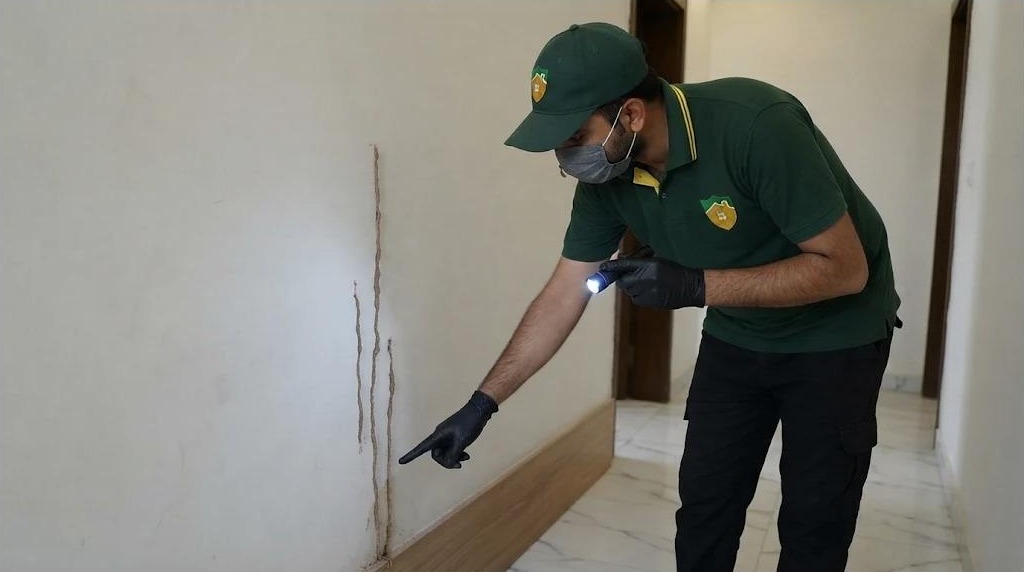
In Lahore’s soil, the common termite is subterranean. It travels from the ground into the house through hairline cracks at the wall-floor joint, pipe openings and expansion gaps. Termites cannot eat concrete, so they build thin, dull brown mud tubes on concrete walls to reach the wood above. They then feed on fixed woodwork from the inside: door frames (chaukhat), built-in wardrobes, kitchen cabinets and wooden wall panelling. That is why a door frame can look fine from outside and still be hollow. To stop them, the treatment has to reach the soil where they live and the wood where they feed, and a spray bottle cannot do either properly.
DIY Termite Spray vs Professional Treatment: Side by Side
DIY spraying is a surface fix with weak products and no barrier. Professional termite treatment combines inspection, a soil barrier through the floor and targeted wood treatment, with a follow-up check.
| Point | DIY termite spray | Professional termite treatment |
|---|---|---|
| Where it works | Only the wood surface you can see | Soil under the floor, wall-floor joints and inside the wood |
| Colony | Untouched underground | Blocked and cut off by a treated barrier |
| Product strength | Low-strength retail products | Professional-grade termiticide at the right dose |
| Inspection | None, you guess where they are | Full house check of frames, cabinets and walls |
| Hidden damage | Missed inside walls and cabinets | Found and treated |
| Result | Termites return in weeks or months | Long-lasting protection with service warranty |
The difference is not effort; it is method. A homeowner simply does not have the equipment or the access to treat the soil under a tiled floor.
Hidden Risks of Doing It Yourself
DIY sprays can push termites deeper into the walls, waste months while damage spreads, expose the family to chemicals used carelessly, and leave no warranty if the woodwork fails later.
Many families try kerosene, diesel or strong household chemicals on termite-damaged wood. These are fire risks and leave a smell for weeks, yet they still do not reach the colony. Repeated light spraying can also make termites move away from the treated spot into a new cabinet or the other side of the wall, spreading the damage instead of stopping it. Meanwhile, every month of delay means more wood eaten from the inside. By the time the problem is obvious, a simple frame treatment has turned into replacing doors and cabinets. Choosing a proper white ants treatment early is almost always the cheaper option in the long run.
How Professional Termite Treatment Works
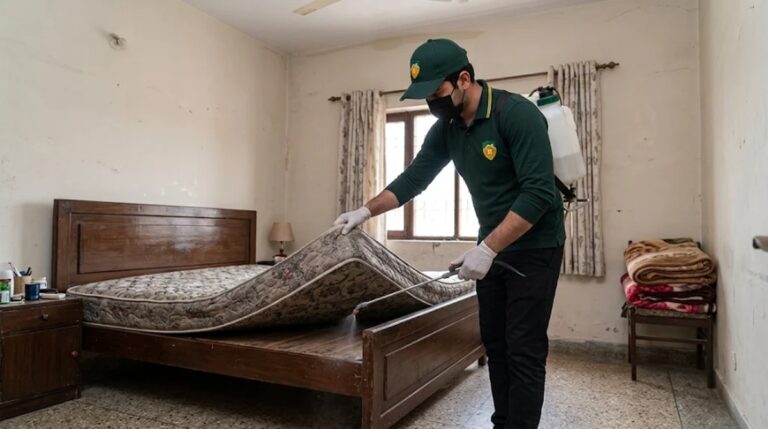
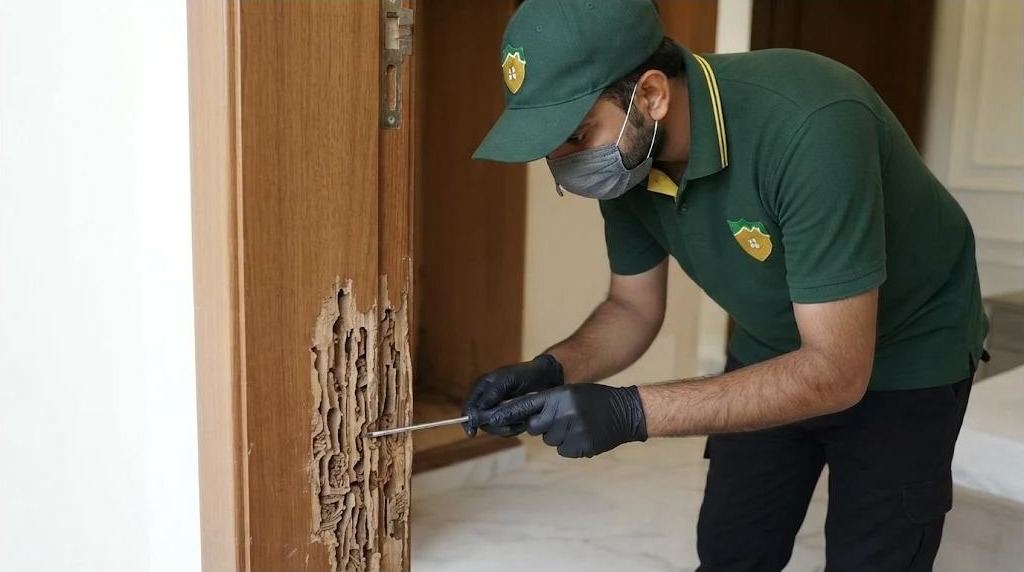
A trained team inspects the house, drills small holes along the walls to inject termiticide into the soil, sprays and injects affected woodwork, seals the holes neatly, and returns for a follow-up check.
At Caretaker, our termite control services follow a tested process:
- Inspection: the technician checks door frames, wardrobes, kitchen cabinets and walls, taps wood to find hollow areas and marks every active point.
- Soil barrier: small holes (12 to 14 mm) are drilled straight down into the floor along the inside of the walls, about two to three feet apart, and termiticide is injected into the soil below. Holes are never drilled in the middle of the room.
- Wood treatment: affected frames and cabinets are injected through tiny holes and sprayed so the treatment reaches inside the wood.
- Neat finishing: drilled holes are filled flush with grout that matches your tiles, so the floor looks tidy.
- Follow-up: the team checks the treated areas again to confirm there is no new activity.
Our team leaves once treatment is complete, and you can clean the rooms after about three hours. This is what we mean by professional termite treatment: a complete barrier, not a quick spray. For homes that also face cockroaches or other insects, we offer combined termite and pest control services in one plan.
When You Must Call a Professional
Call an expert if you see mud tubes on walls, hollow-sounding frames, winged termites indoors, or damage in more than one spot. These signs mean the colony is active and DIY will not reach it.
Book a professional inspection if you notice:
- Thin mud tubes running up concrete walls or skirting.
- Door frames or cabinets that sound hollow or crumble when pressed.
- Winged termites near lights after rain, or wings left on window sills.
- Damage returning after you have already sprayed once or twice.
- Damage in more than one room, which means the colony is spread under the house.
If you are searching for termite spraying near me after seeing any of these, ask for a full inspection rather than just a spray. Our guide on termite control methods explains the options in more detail, and you can see our full termite control services in Lahore for local coverage.
Frequently Asked Questions
1. Can I get rid of termites with a DIY spray?
A DIY spray kills only the termites it touches. The colony in the soil survives and returns, so a lasting fix needs professional termite treatment with a soil barrier.
2. How long does professional termite treatment last?
A properly applied soil barrier and wood treatment protects a home for several years. Caretaker provides a service warranty and follow-up checks with every termite job.
3. Is professional termite treatment safe for my family?
Yes. Trained technicians use the correct dose and inject most of the product into the soil below the floor. Keep family members out for about three hours, then ventilate and clean.
4. Do I need drilling for termite control in Lahore?
For active subterranean termites, yes. Drilling small holes along the walls lets the treatment reach the soil. This is a standard part of termite control in Lahore homes.
5. What is dimak treatment and how is it different from spraying?
Dimak treatment is the common name for termite treatment. A complete job includes a soil barrier and wood injection, while spraying alone only treats the surface.
6. How do I book deemak control in Lahore?
Call or WhatsApp Caretaker, or fill in the form on our website. We will inspect your home and plan deemak control in Lahore or Islamabad to suit your property.
Book Professional Termite Treatment Today
Every week of delay lets termites eat deeper into your door frames and cabinets. Skip the trial-and-error sprays and let Caretaker’s trained team inspect your home, find the source and build a lasting barrier. Call us, message us on WhatsApp or fill in the form to book your termite treatment in Lahore or Islamabad.